RV Interior Lights and Truck Interior Lights: A Practical Guide for OEM and Vehicle Projects
author: DAMAVO
2026-10-07
Car Interiors might sometimes appear to be an insignificant component of a complete vehicle project, but in reality, it influences a space‘s character and function.
Good rv interior lights help you to move around your storage living space more easily, accessing your stored items, reading the paper, cooking or relaxing. For trucks, vehicle interior lights on a commercial vehicle definitely help to brighten the cab, sleeper or storage areas.
The light must also be compatible with the vehicle design for OEM buyers.
Voltage, brightness, size, method of mounting, housing material, and space for installation are all factors. This guide covers the key considerations for selecting lighting in your RV, truck, campervan, caravan, or other vehicle project.
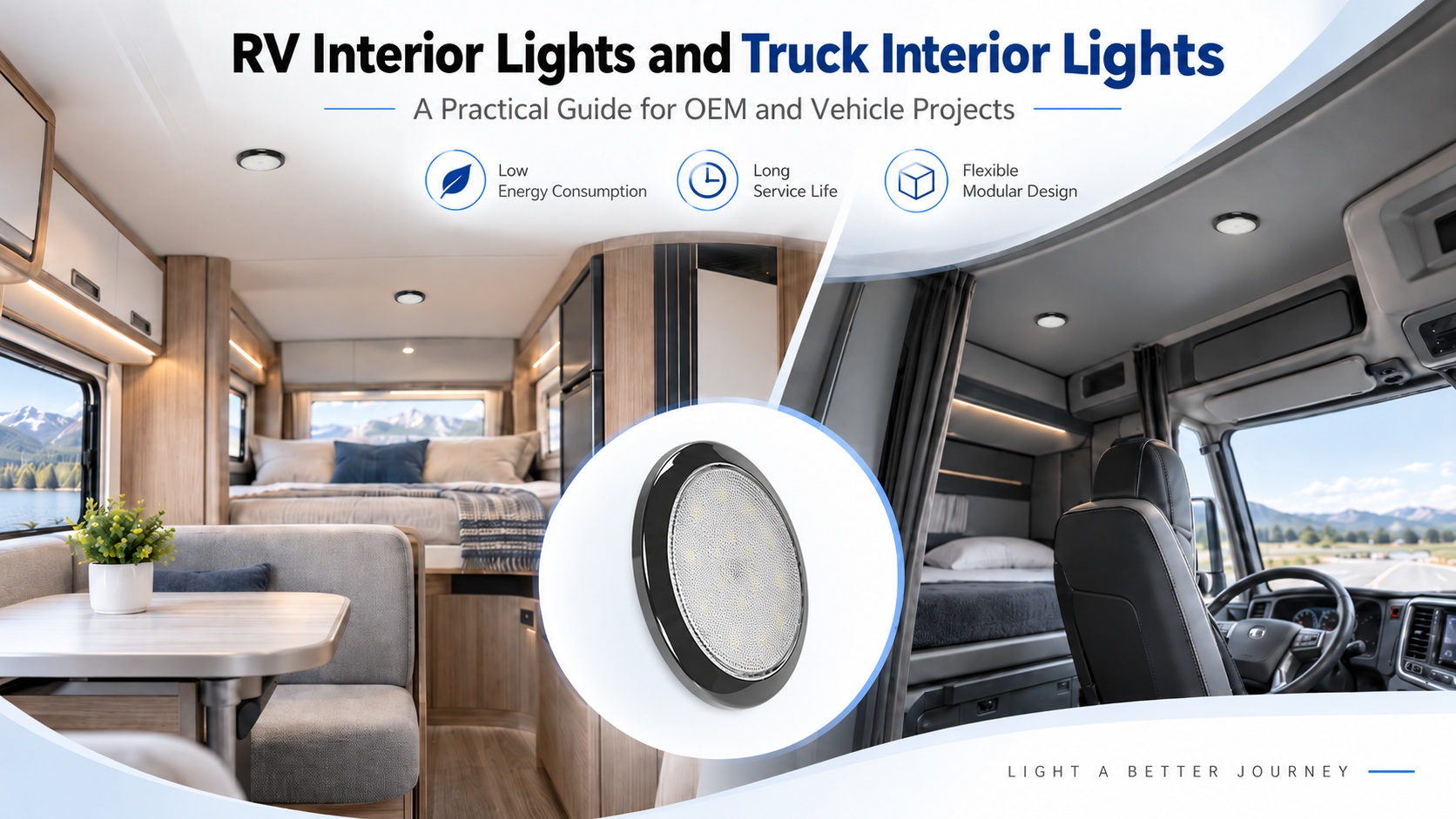
What Do RV Interior Lights Do?
RV Interior Lights are found inside of an RV and similar mobile homes.
They may be installed in:
- Ceiling areas
- Bedsides
- Kitchens
- Cabinets
- Storage spaces
- Entry areas
- Reading zones
Since the interiors of RVs are small, the illumination should occupy minimal space.
This one reason why low profile LED lights are so popular in campervans, motorhomes and caravans.
Good RV lighting is bright enough that does not drain too much the battery pack and does not get the inside into the feeling of being cramped.
What Do Truck Interior Lights Do?
Truck interior lights primarily illuminate the cabins, sleeper areas, storage compartments and other spaces within commercial vehicles.
These lights are often working in a more harsh environment than ordinary household lighting.
The light needs to be able to operate over a long period of time as the trucks may be stuck, or driving down uneven roads. Also the lights need to be as easy to set up and robust as possible, as they will be mounted on trucks.
Important points often include:
- 24V compatibility
- Compact size
- Low power use
- Heat resistance
- Stable mounting
- Easy maintenance
For fleet and OEM projects, appearance can matter too. The light should fit the cab instead of looking like an added part.
RV Ceiling Lights Why the Low-Profile Design is Important
Often space is at a premium in RVs.
Therefore, the rv ceiling lights are more likely to have a narrower or low profile housing.
Thick light can also eat into the headroom, which in campervans and smaller motor homes is very valuable. A thinner surface-mounted light will be much less intrusive visually and easier to keep clean.
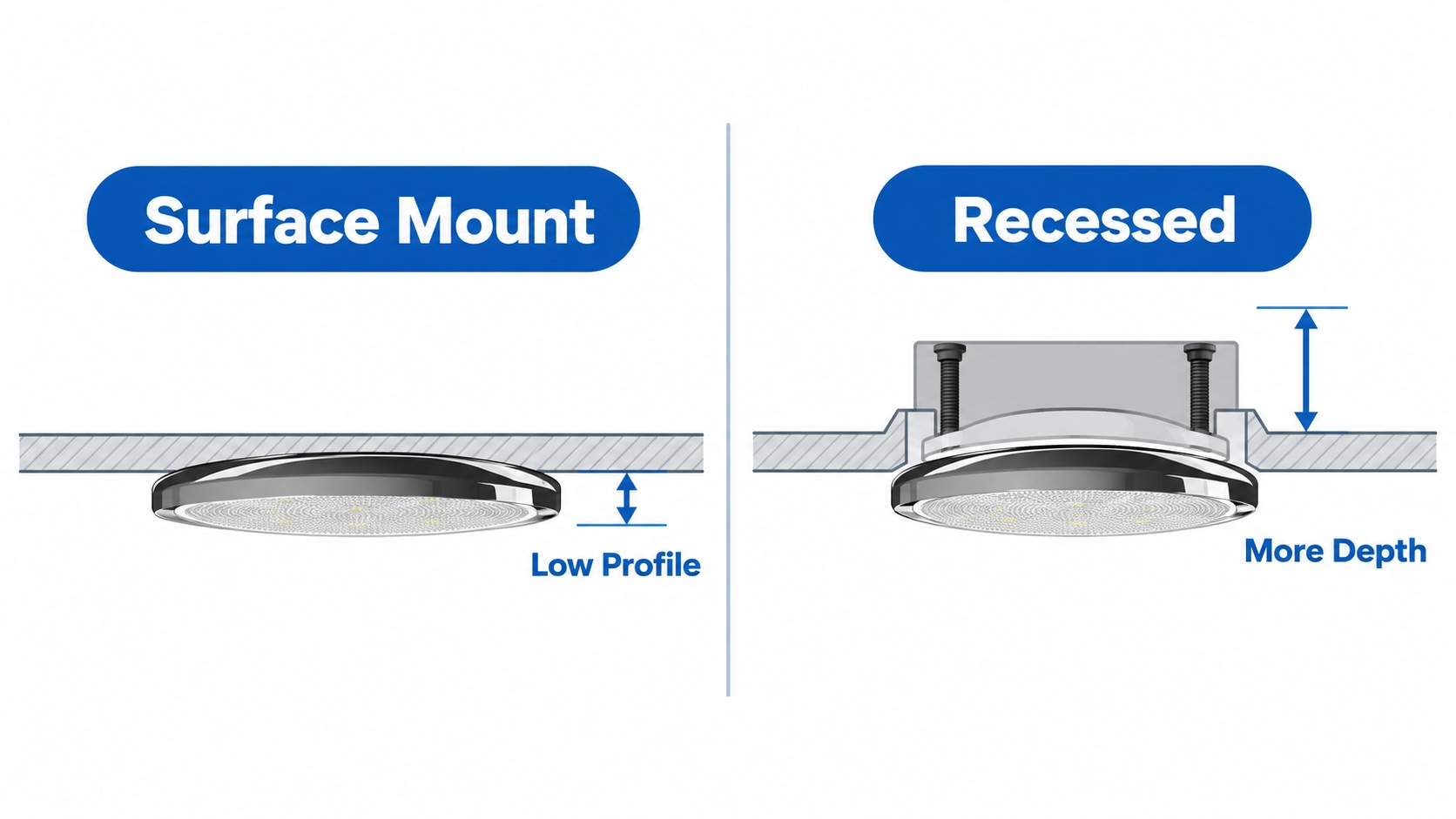
Surface-Mount versus Recessed Installation
For the installation against the “ceiling” or ceiling panel, the surface-mount method.
Since have a shallow cutout behind the surface it is easy to install.
Recessed‘s look great by themselves, but do require significantly more space behind the panel.
A surface-mount design is preferable for most of the vehicle projects because of the reduces depth of installation and easier assembly.
Size and Shape Count as Well
A small round light can be an effective choice in a tight space.
A bigger ceiling light may distribute the lights in a greater area.
The right one is determined by the interior size and position.
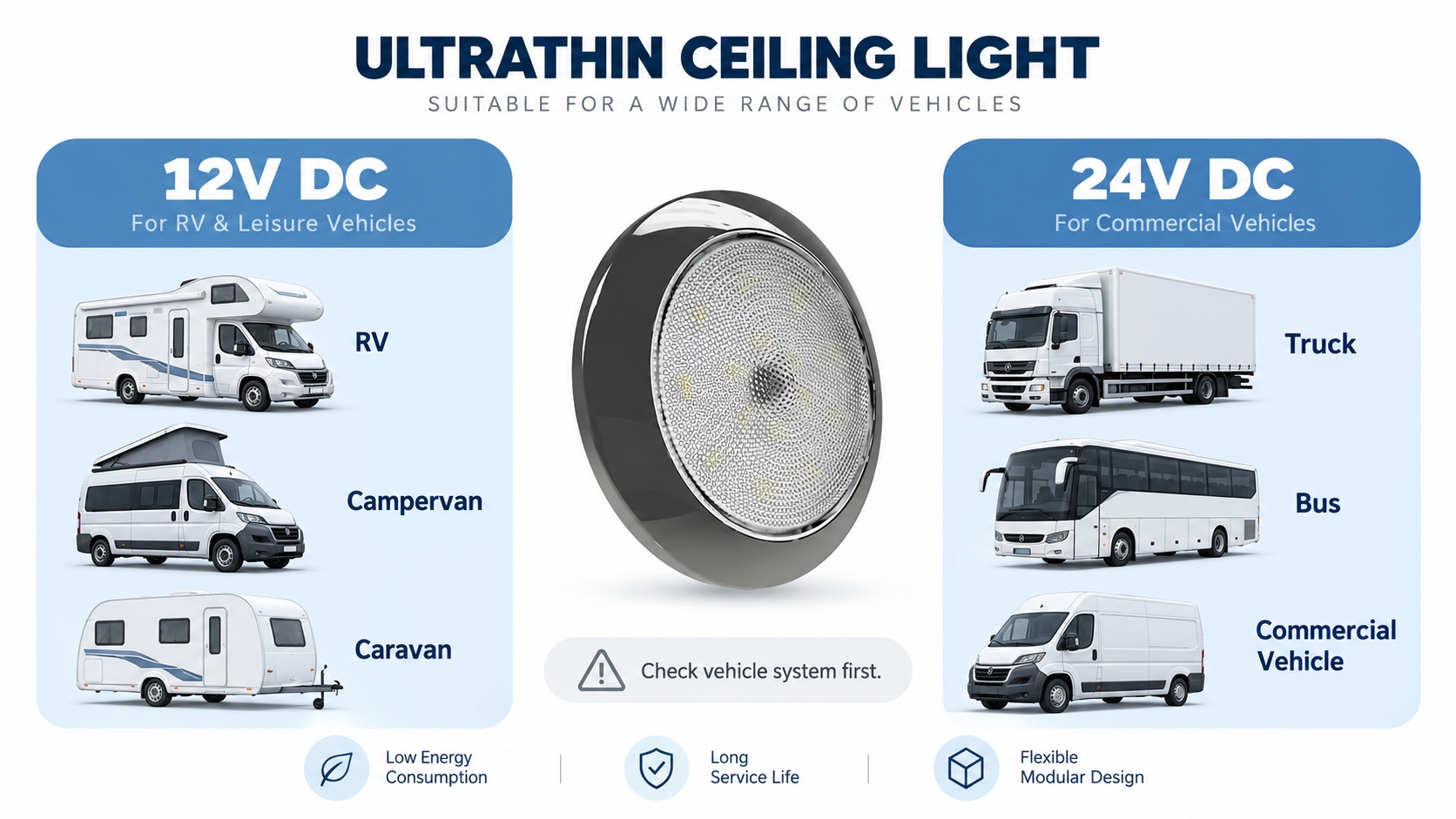
12V and 24V Interior Lighting
It should be noted that all vehicle lighting should be compatible with the voltage that the electrical system operates on.
A lot of rvs and camper vans have 12 V systems.
There is a large variety of equipment already in use, a substantial proportion of which are trucks and buses many of these operate on a 24V system.
Some lights support a wider 12–24V DC input range. This can make one design useful across several vehicle types.
12V RV Interior Lights
12V lighting is common in:
- RVs
- Campervans
- Caravans
- Small mobile cabins
If the vehicle uses a 12V system, the light should be rated for that input.
24V Truck Interior Lights
24V lighting is common in:
- Trucks
- Buses
- Commercial vehicles
- Some heavy-duty equipment
For truck interior lights, voltage should always be checked before production or installation.
How Much Brightness Do You Need?
More brightness is not always better.
A very bright light in a small RV may create glare.
A light that is too weak may make it hard to see inside a cabinet, sleeping area, or storage space.
The right brightness depends on:
- Room size
- Mounting height
- Number of lights
- Light angle
- Main use of the area
Ceiling lighting has the potential to be too intense when used on the whole, in which case a wash of light would be better suited then a very bright point.
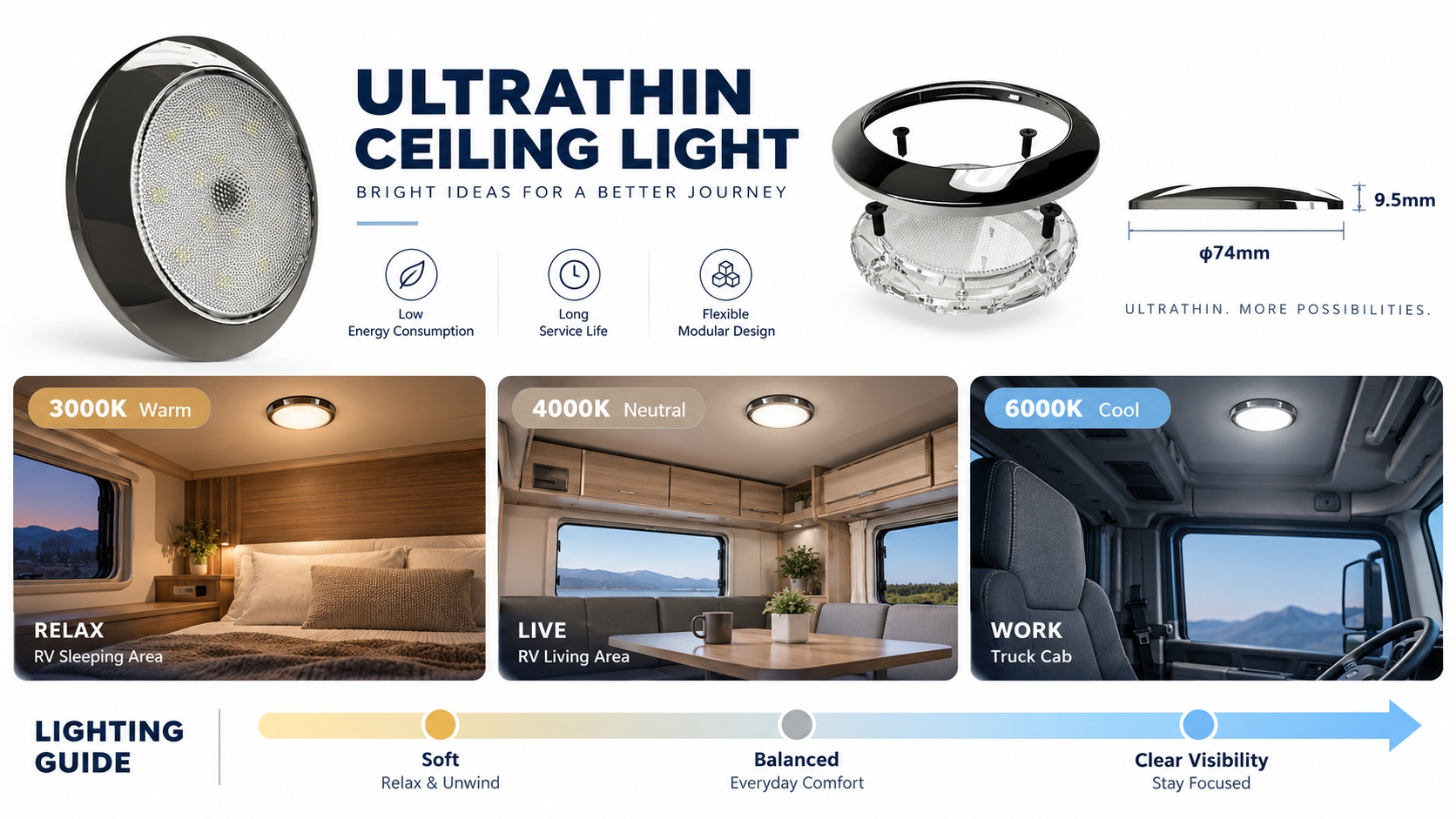
Color Temperature for Camper and Truck Interior
Color temperature can also set the mood of the interior space.
The warm white, has more of a calmer. And a more chilled out ; feel to it.
Neutral white has good balance and seems good for lighting on the whole.
Can brighten up a room and be useful in workspaces.
Gentle or relatively cool white tends to be a soothing color in the RV.
Since truck cabs or serviced area are situated is the serviced area or working areas, neutral, or cool white may be preferable for better viewing.
Housing Materials/Vents to Dissipate Heat
Must be able to survive daily use, heat and vibration.
Common housing materials are ABS, PC, and aluminum.
ABS and PC are high class and lightweight.
Aluminium could give an enhanced premium feel and also better heat dissipation.
Material selection is largely dictated by the product design, target cost and install area.
Effective control of heat is essential too, for maintaining the stable operation of light-emitting devices over long periods.
Introduction as to why energy efficiency is important
LED lighting has been installed in many RVs and trucks as it consumes less power than most older types of lighting.
This matters when several lights are connected to the same vehicle battery.
Lower power use can help reduce the load on the electrical system, especially when the vehicle is parked for long periods.
For OEM projects, energy efficiency is often just as important as brightness.
Installation Factors for OEM Projects
A light may look good on paper but still be difficult to use if the installation details are wrong.
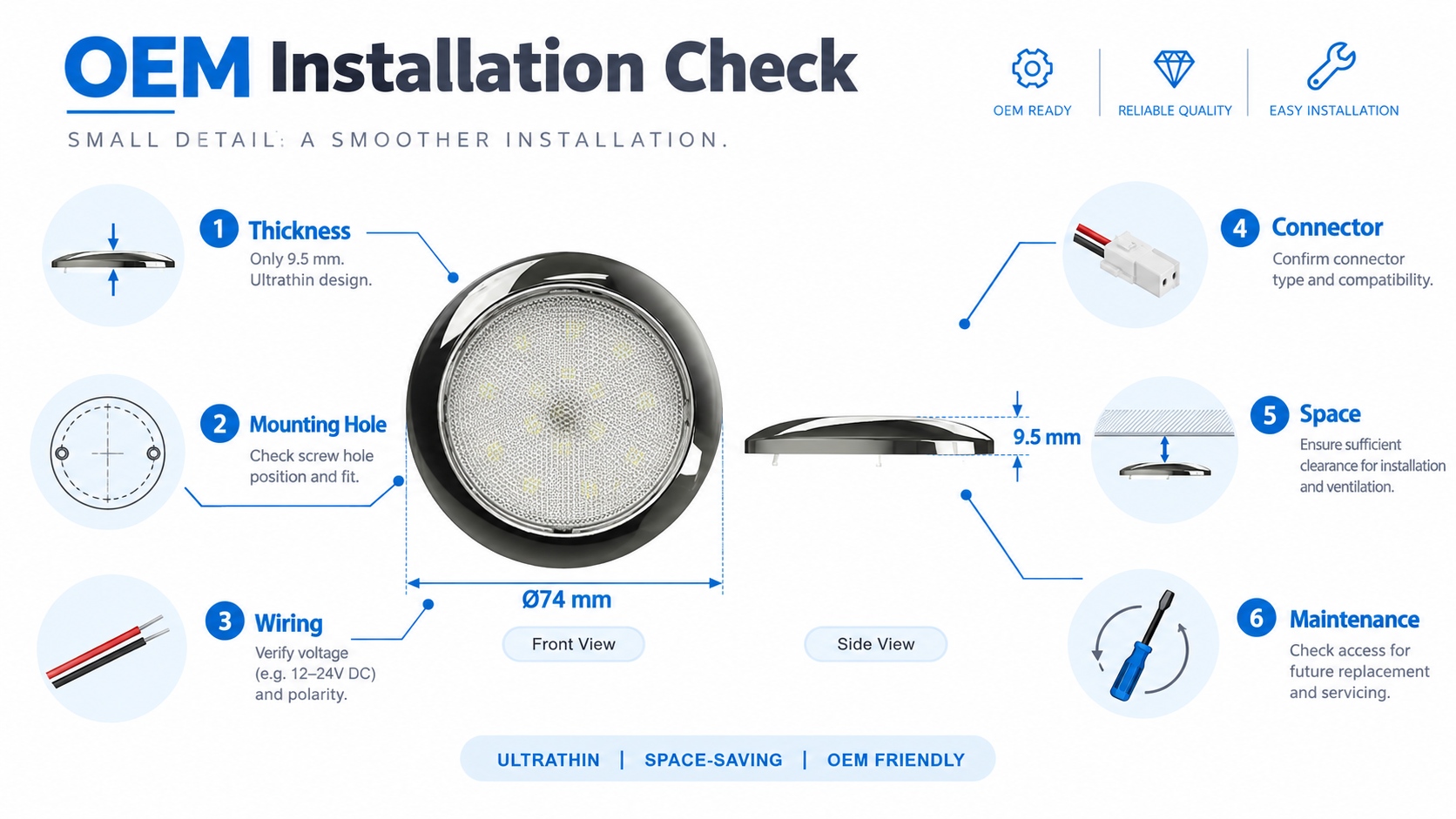
Before choosing a model, check:
- Product thickness
- Mounting hole position
- Wiring direction
- Connector type
- Installation space
- Surface finish
- Maintenance access
For rv ceiling lights, thickness is especially important.
For truck projects, wiring position and mounting strength may matter more.
These details are easier to solve before production than after installation starts.
How to Choose RV Interior Lights for OEM Projects
Before selecting rv interior lights, check the basic project requirements first.
A simple checklist includes:
- Vehicle voltage
- Product size
- Installation depth
- Brightness
- Color temperature
- Housing material
- Mounting method
- Connector and wiring needs
For OEM buyers, it is also useful to ask whether the supplier can support custom housing color, packaging, logo, connector, or other design changes.
How to Choose Truck Interior LightsFor truck interior lights, durability and voltage are especially important.
Check whether 24V input is required.
Also consider:
- Vibration
- Long operating hours
- Heat
- Installation space
- Wiring layout
- Maintenance needs
Commercial vehicle lighting should be simple, stable, and easy to service.
Customization for RV Ceiling Lights and Truck Interior Lights
OEM projects often need more than a standard product.
Common customization options include:
- Housing color
- Product size
- Input voltage
- Brightness
- Color temperature
- Logo
- Packaging
- Connector type
- Mounting structure
DAMAVO is designing and manufacturing power and lighting solutions for vehicle applications, providing OEM and ODM projects for RVs, trucks, caravans, camper-vans and other mobile equipment.
Such customization can adjust to the vehicle design rather than vice versa.
Common Mistakes to Avoid
One of a common mistake is selecting only by brightness.
Another is placing the vehicle voltage number on the line line.
Likewise, it is very simple to select an overly heavy lamp for a low ceiling or room.
Come to OEM, it should be secured before mass production on dimension, wiring, mounting method, position of connector and so on.
Final Way to Remember
A vehicle light should fit both the electrical system and the interior space.
Modern analogs for rv interior lights should feel comfortable, consume minimal power, and be small.
If you are looking for rv ceiling lights a space saving slim surface mounted option would be to choose.
When it comes to truck interior lights, all it counts is the voltage adaptation, resistant, and steady installation.
The most suitable is the one corresponding the most with the real vehicle, the mounting area and the project.
FAQs
What Voltage Is Used for Lights in the Interior of RVs?
Most RVs have a 12 V system, but a number of lighting items work over a broader 12–24 V DC range.
Is it possible to use 12V R V ceiling lights in a 24 V truck?
Yes, if either the light is specified for 24 V input or it is compatible with a range of 12 V–24 V.
What kind of RV ceiling light is suitable for a ceiling with low ceiling?
Surface mounted light, which is trendy and not occupying too much area of the ceiling, is recommended.
What intensity should the interior lighting of the truck have?
This will depend on the size of the truck‘s cab and the purpose. The light should be bright enough to see by, but not so bright as to cause glare.
Do Surface-Mount Lights Easier to Install?
In most situations, yes. Many times they require less depth for installation.
What can be customized for these OEM vehicle lighting projects?
Voltage, housing color, size, brightness, color temperature, connector, logo, packaging and mounting design, etc.
Can I use LED Interior Lights for my car in the long term?
Yes, can be used in your car for a long time. LED are very popular in the vehicle interior as they are small, energy efficient and have a long service life.
Bedside Reading Light with USB: Why Charging and Lighting Work Better Together
Motion Sensor Closet Light Buying Guide: Battery Life, Sensor Range, Brightness, and Installation
Related Article

Learn how to choose the right 12V LED strip lights for RV and marine applications. This guide covers SMD vs COB, waterproof ratings, brightness, color options, installation methods, and custom LED strip lights for OEM and ODM projects.
12V LED Strip Lights Buyer’s Guide: Which 12V Lights Are Best for RV and Marine Applications
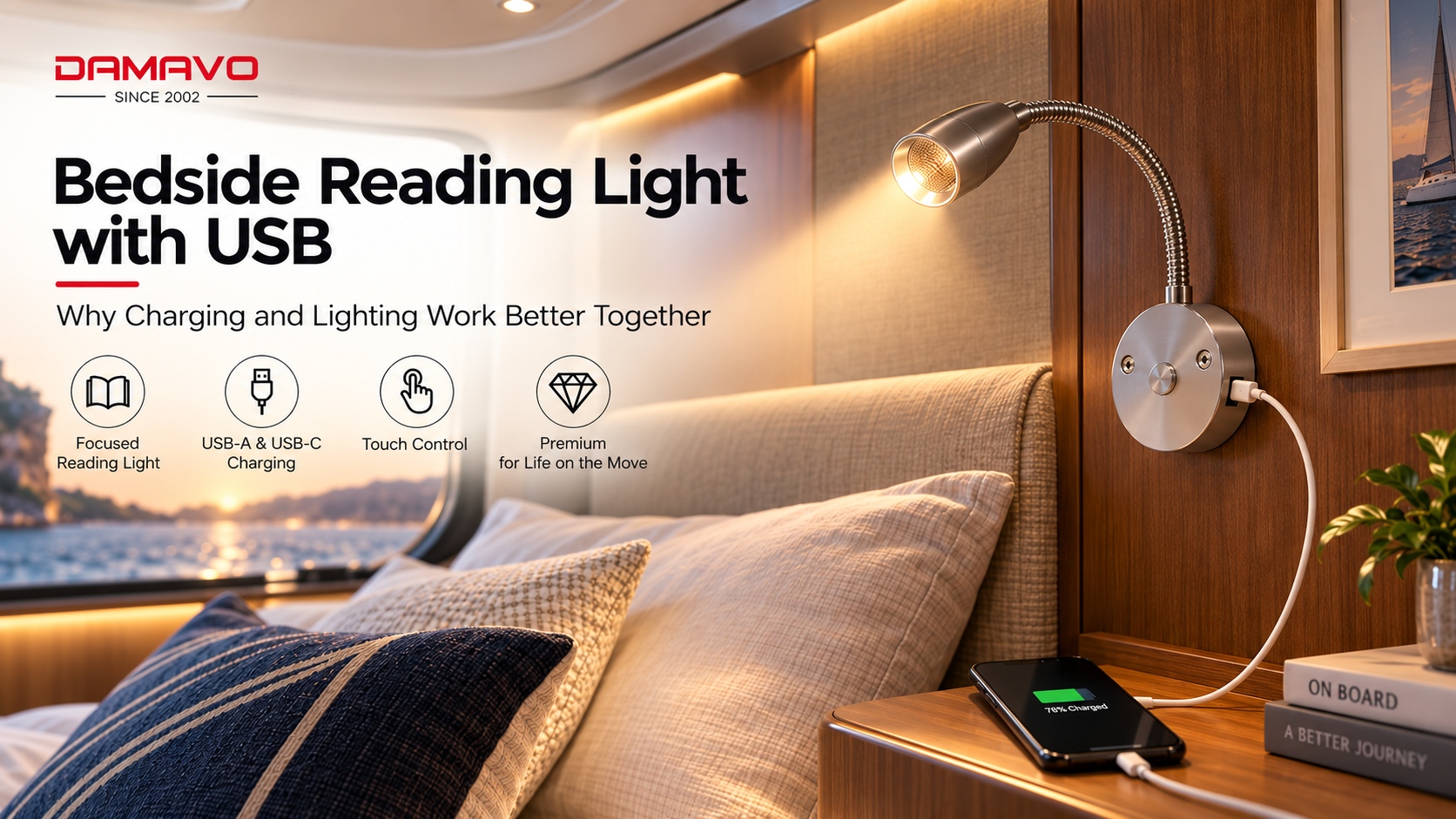
Learn why a bedside reading light with USB is a practical choice for RVs, truck sleepers, yacht cabins, and small bedrooms. This guide explains the benefits of wall mounted reading lights, USB-A and USB-C charging, flexible gooseneck design, 12V–24V compatibility, and OEM customization.
Bedside Reading Light with USB: Why Charging and Lighting Work Better Together
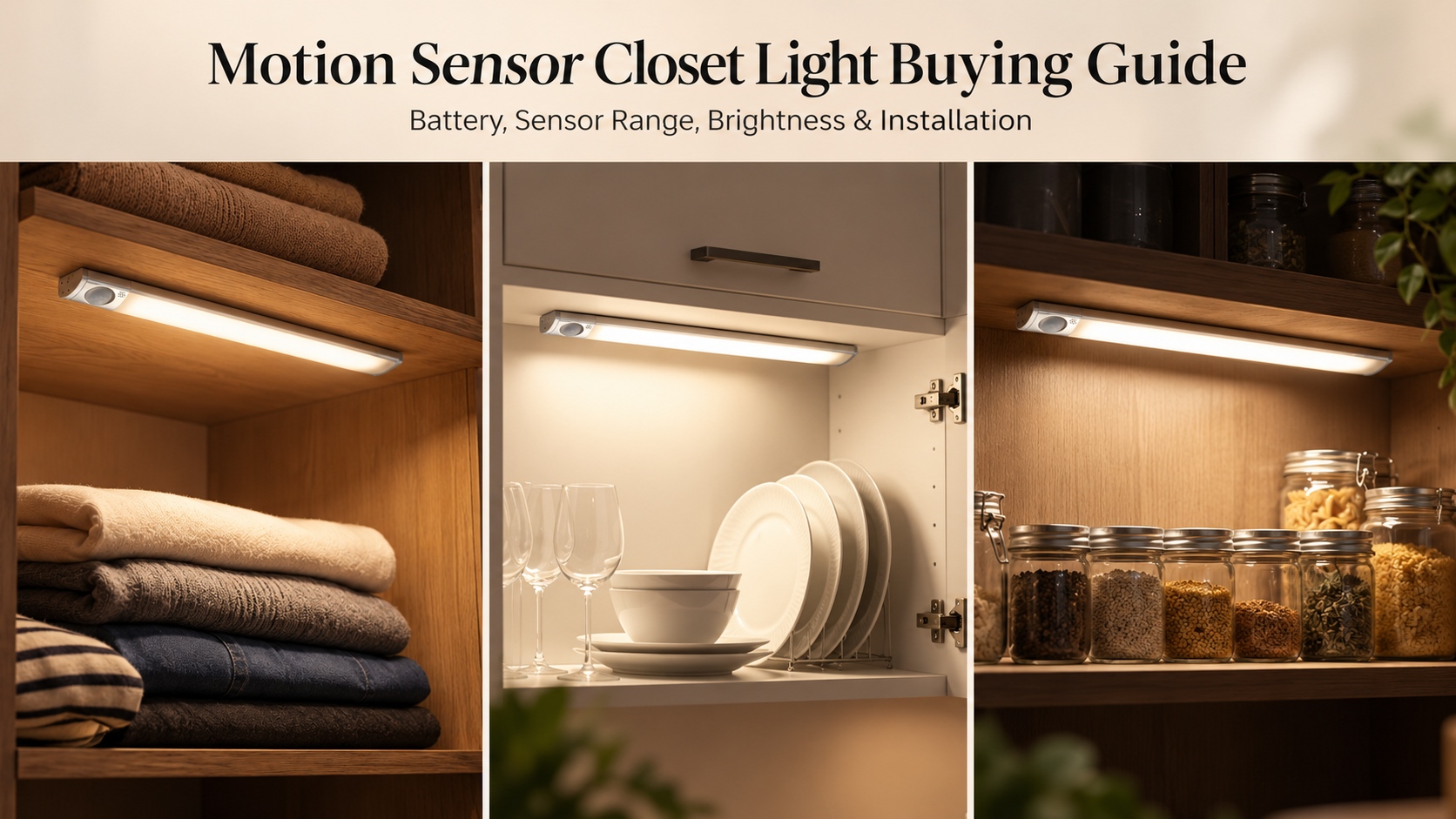
Learn how to choose the right motion sensor closet light by comparing battery life, sensor range, brightness, color temperature, and installation options for closets, cabinets, wardrobes, and RV interiors.
Motion Sensor Closet Light Buying Guide: Battery Life, Sensor Range, Brightness, and Installation