
Side Marker Lights Buying Guide: How to Choose the Right LED Lights for Trucks and Trailers
author: DAMAVO
2026-11-20
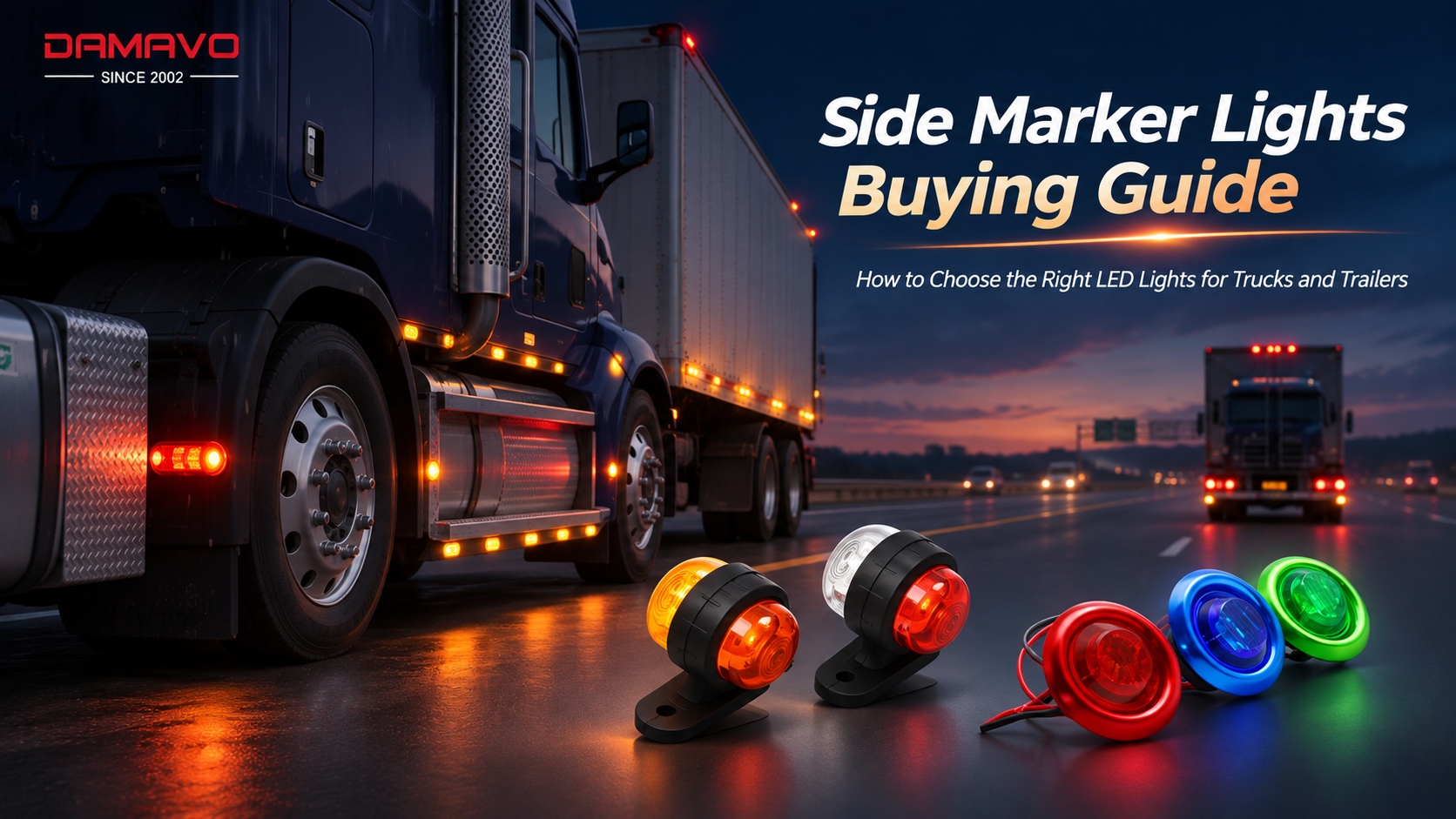
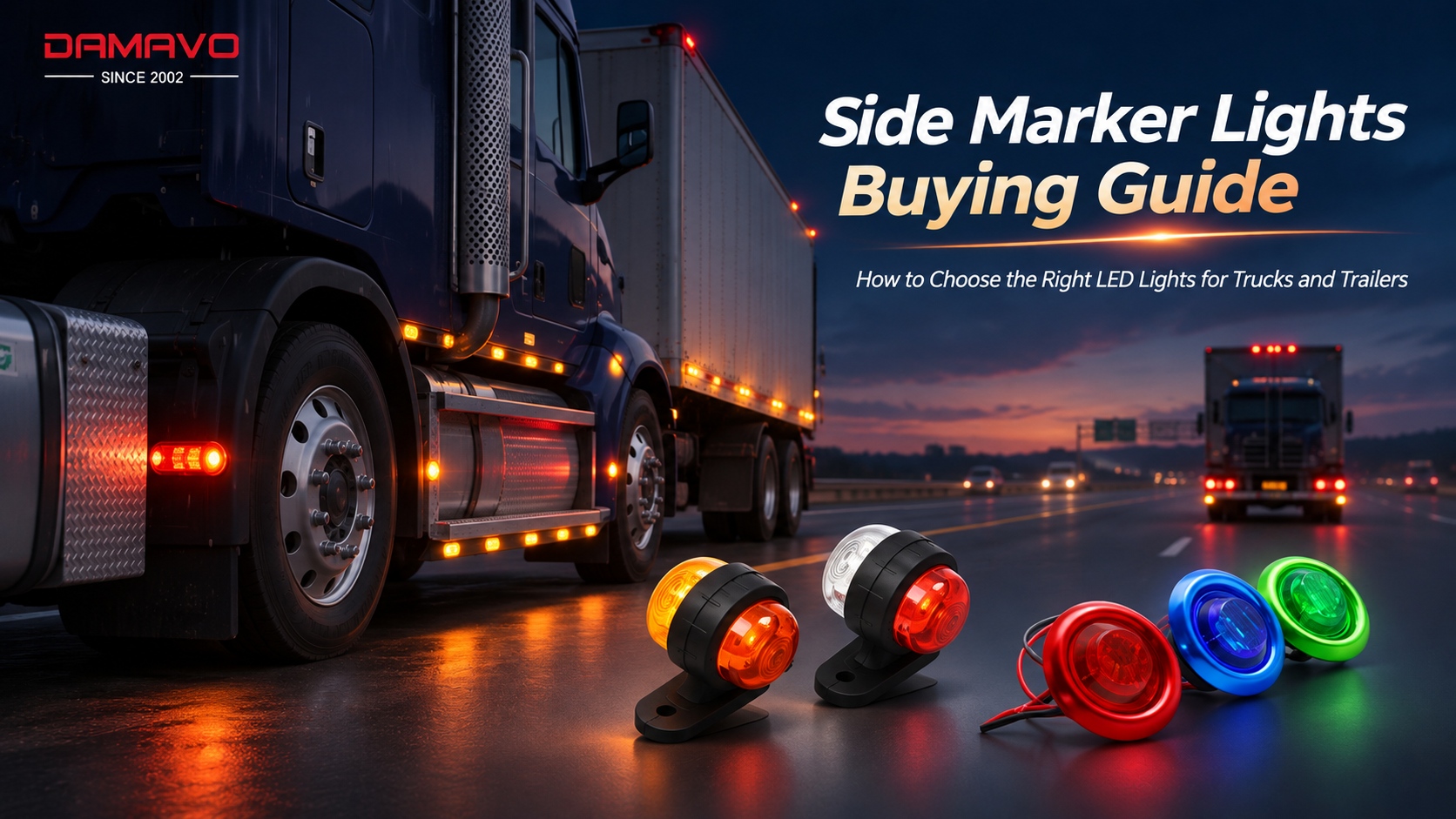
The side marker lights may be tiny, but they do their job.
It’s difficult to see how long a truck or trailer is at night. Proper side marker lights will make a vehicle more visible to others.
This is even more of a concern when it comes to long trailers, big trucks, buses, RV’s, and work vehicles.
Picking a marker light can seem simple. However, the design of the marker light including the color, voltage, size, mounting location, and water resistance can impact the performance of the light.
Here are the things to check before making a purchase.
What Are Side Marker Lights?
Side marker lights are small lights installed along the sides of a vehicle.
Their purpose is to aid in displaying the shape and orientation of the vehicle in the dark or during reduced visibility.
They are often used on:
- Trucks
- Trailers
- Lorries
- RVs
- Buses
- Commercial vehicles
- Agricultural equipment
- Construction machines
A short vehicle probably needs only a few lights. A long trailer probably needs several along the side.
The actual number and position will vary by vehicle and location.
It’s this straightforward: To enhance the vehicle’s visibility.
Side Marker Lights vs. Clearance Lights
These words are occasionally used in conjunction, yet do not consistently have the same significance.
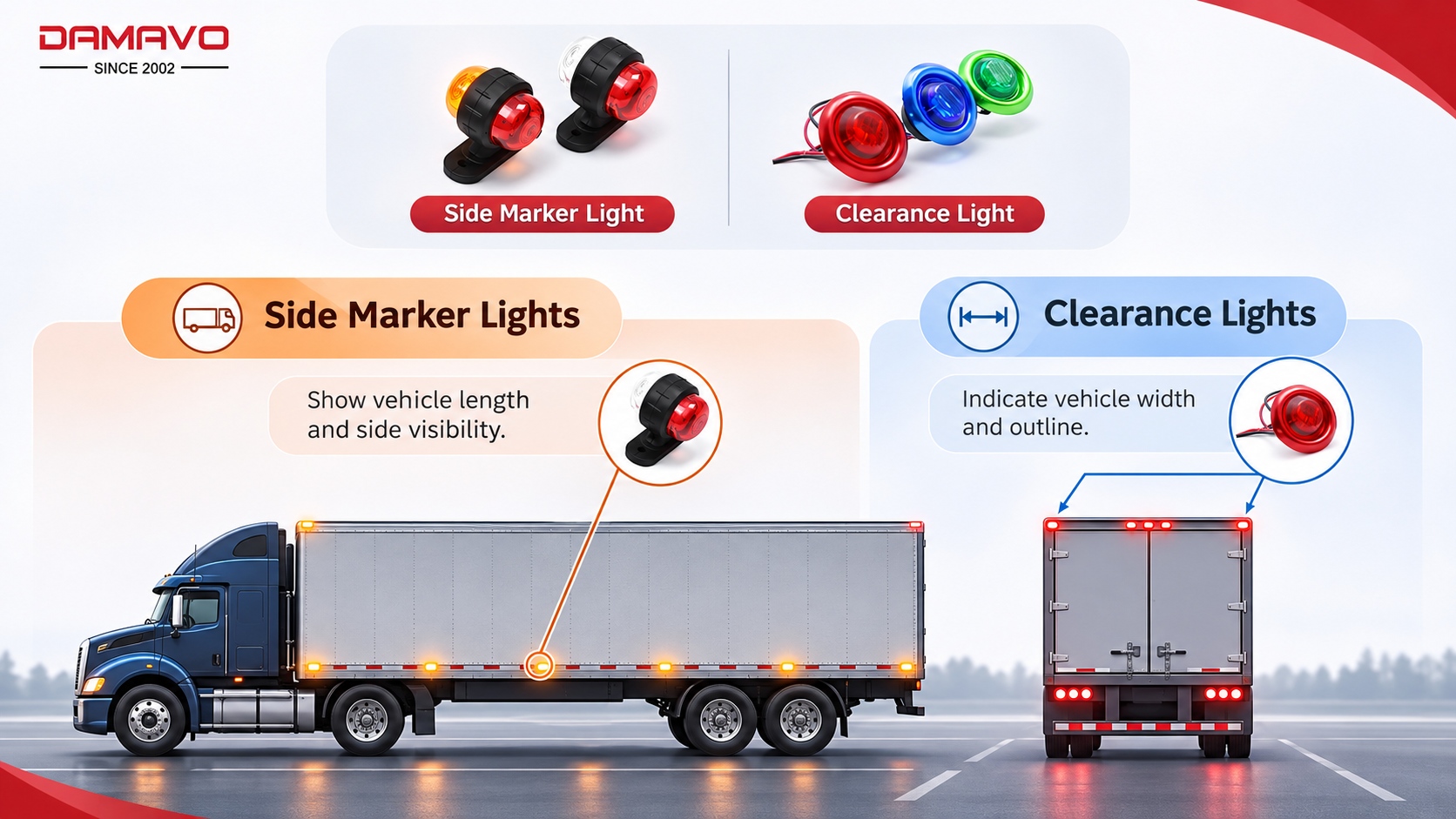
Sidebar marker lights will primarily aid to display the lateral position and length of the vehicle.
These clearance lights are sometimes positioned along the extreme sides of the vehicle to help indicate its width or shape.
Both may be used by a large truck or trailer.
That’s why the product name alone isn’t enough. Before you place an order, find out where the light is going to be installed and what it needs to illuminate.
If you are replacing an old light, first verify the original mounting location.
Why LED Side Marker Lights Are Common
LED side marker lights are commonly seen on trucks, trailers and other commercial vehicles.
The first one is power consumption.
There could be multiple marker lights on a big rig. Older style bulb marker lights tend to be less efficient than newer LED marker lights.
They also can be made in smaller sizes which helps in the mounting space.
LED lights do not use a filament bulb. This could be very helpful in vehicles that get a lot of vibration on a daily basis.
Still, the LED itself is only one part of the product.
All of it – housing, wiring, sealing, mounting.
An inferior LED can premature failure, if it’s housed in a badly sealed casing.
Which Color Should You Choose?
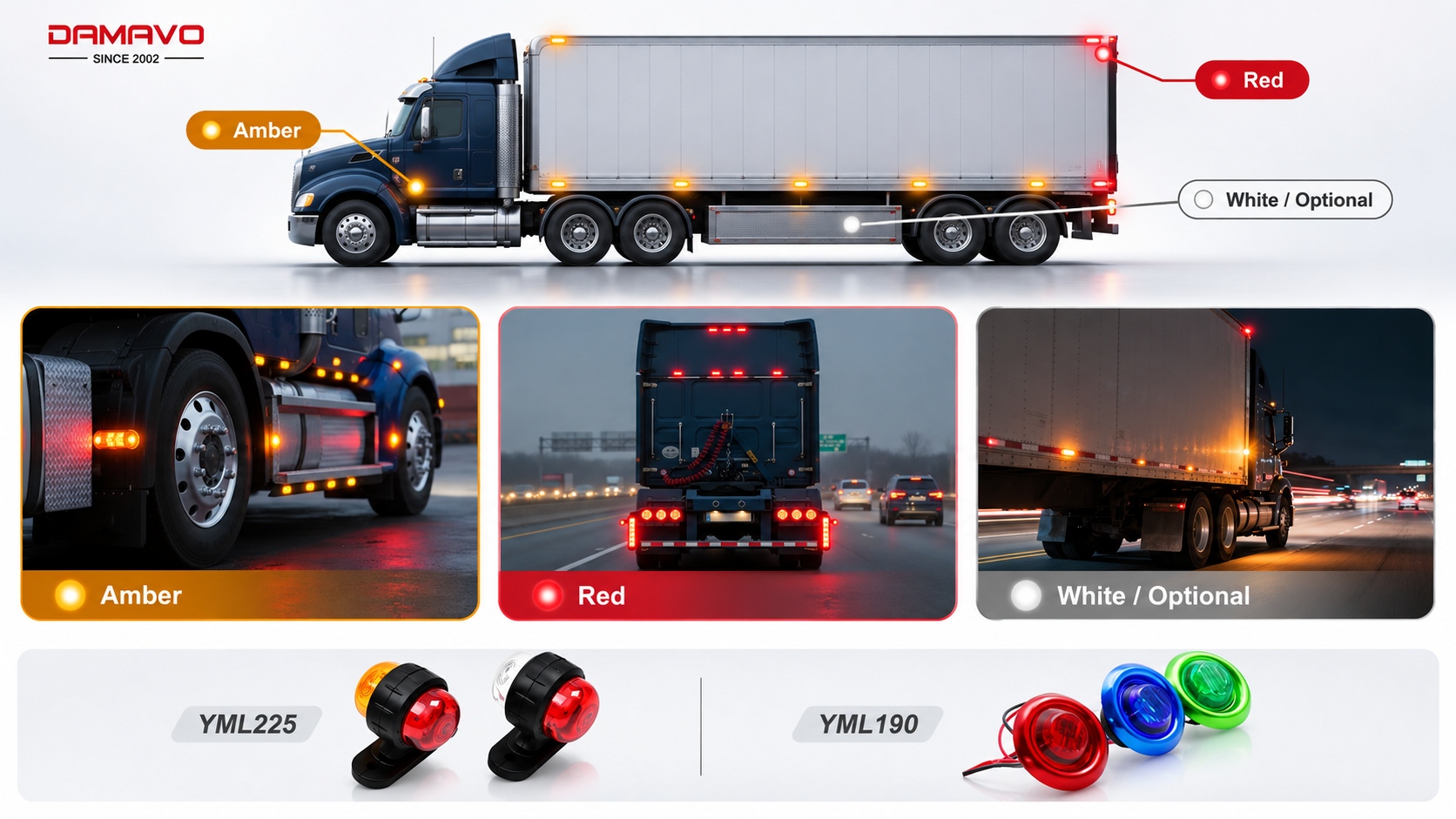
Marker lights are available in various colors, such as amber, red, and white.
Color is determined by the location of the light and the rule of the target market.
In other vehicle lighting schemes, the side or front side is Amber. Towards the rear, Red is more common.
Whites can be used elsewhere, depending on application.
Attempt not to opt for a color just because it appears to be a lot better.
When it comes to truck marker lights, it is a good idea to consider the mounting position, as well as your local vehicle lighting standards.
This becomes especially important when the same product is shipped to different countries.
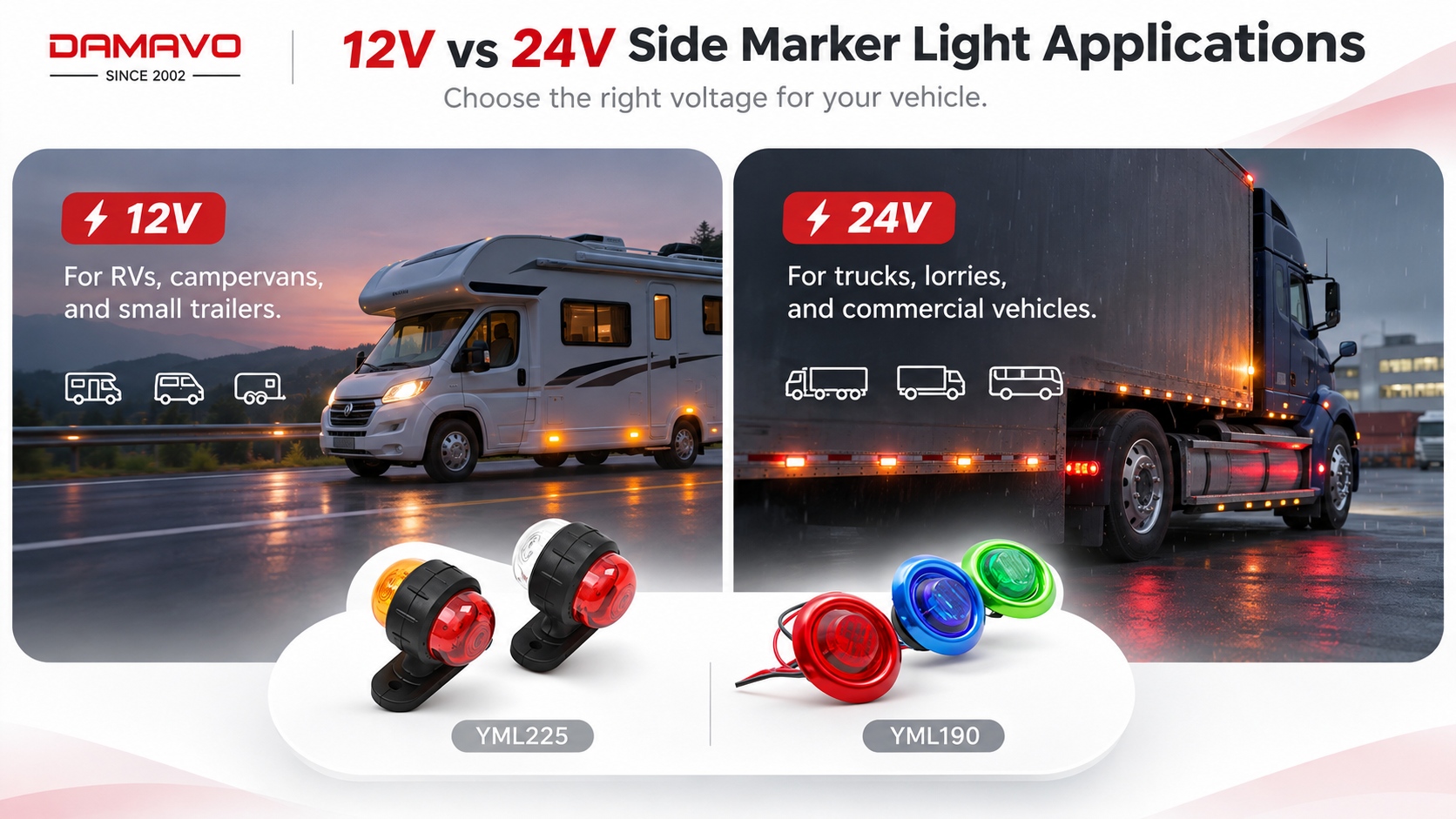
Check 12V or 24V Before Installation
Testing for voltage is simple enough, but it’s also quite easy to make mistakes.
12V systems are common in RVs and small cars.
Many trucks, buses, and commercial vehicles operate on 24V.
Make sure to verify the rated input voltage of a marker light before installation.
Some products are compatible with both 12V and 24V. Useful if you supply a variety of vehicle types.
However, don’t ever assume that any LED marker light will work with both voltages.
The wiring and connector also have to be compatible with the vehicle.
This may fit the mounting hole but still be the incorrect electrical version.
Size and Mounting Position Matter
You do not need a large marker light.
Small lights can also do a good job if they are placed in the right place.
Before buying, check:
- Overall size
- Mounting hole size
- Available depth
- Wire direction
- Connector type
- Viewing angle
Light placement is just as significant as the brightness of the light.
Even a very bright light can be difficult to spot if it is pointed elsewhere.
Spacing is also important for a long truck or trailer.
One strong light cannot always substitute for multiple marker lights spaced along the entire length of the vehicle body.
In the case of a new vehicle, it is preferable to plan the mounting points before production.
Waterproofing and Road Conditions
The marker lights are mounted in an area that is under heavy use.
They may face:
- Rain
- Road spray
- Mud
- Dust
- Vibration
- Heat
- Cold
- Pressure washing
For this reason, protection from water and dust are also significant.
Compare the protection rating of the LED side marker lights, and if it is appropriate for where you will install it.
But do not get distracted by the lamp housing.
The wiring at the back, connector, cable entry and mounting hole should be protected.
A sealed light can still experience issues if water reaches an exposed connector located behind the panel.
This is one of the most common points buyers overlook.
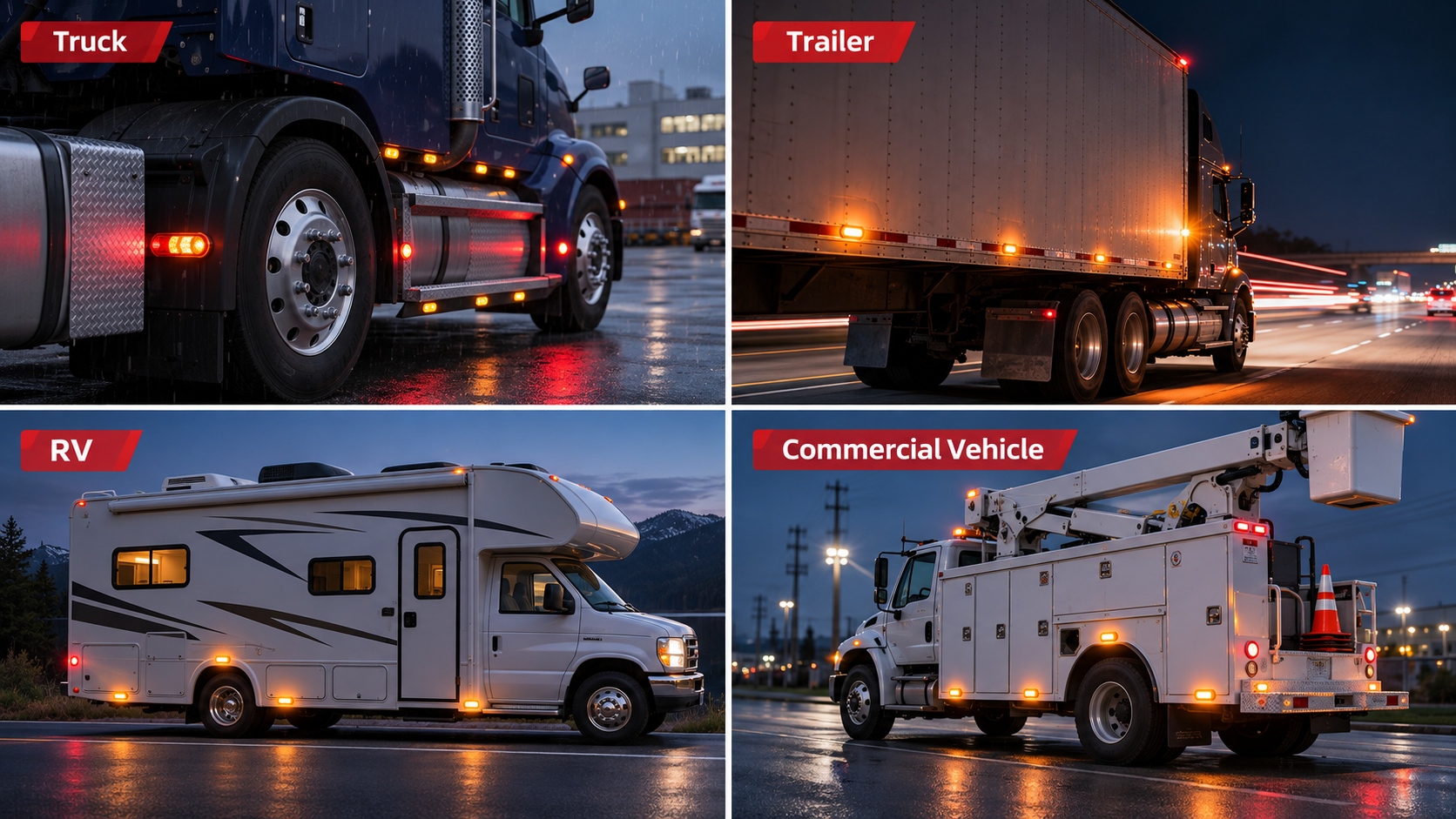
Trucking Marker Lighting System by Vehicle Type
Not all vehicle requires the same style of marker light.
Trucks and Lorries
Many trucks are 24V.
They may have lights on all sides of the body so the car is visible.
Visibility, size and long-term stability count for these vehicles.
Trailers
Long trailers need side visibility even more.
Decide where and in what order to put the lights.
RVs and Campervans
To assist in outlining the vehicle shape at night, the use of marker lights.
Some RV electrical systems are 12V so you should check the voltage before placing an order.
Agricultural and Construction Equipment
Vibration, dirt, and mud could all be more prevalent.
For these, the security of habitation and safeguard of the surroundings are more essential.
What Should You Check Before Ordering?
A brief list of rules can do so much.
1. Vehicle Type
Is it for a truck, trailer, rv, bus, or machinery?
2. Voltage
Determine if your vehicle is operating at 12V or 24V.
3. Color
Select the colour according to your mounting position and your local regulations.
4. Size
Ensure the light will clear the space you have available for mounting.
5. Visibility
Make sure the light is visible along the specified line of sight.
6. Protection
Select an appropriate protection grade against rain, road spray, dust, and washing.
7. Wiring
Cable length, connector and route.
Test a sample on a vehicle for a bigger order.
Common Mistakes to Avoid
One common mistake is choosing a marker light only by brightness.
Brightness counts, but location and angle of view do too.
Ordering the incorrect voltage.
12V lights should not be used on 24V unless that product supports 24V.
The color may create issues. The correct shade will be determined by the location of the lights.
Buyers can also get their water protection wrong.
A water resistant enclosure does not necessarily mean the wiring on the reverse side of the panel is protected.
And lastly, don’t think one type of mounting will suit all vehicles.
Check the actual installation location.
OEM and Custom Marker Light Projects
OEM projects sometimes require more than a typical off-the-shelf light.
Questions to Ask Buyers might need to verify:
- Housing size
- Light color
- Input voltage
- Power
- Connector
- Cable length
- Mounting structure
- Protection level
- Packaging
Even a minor change in size can be significant when the lighting you installed on hundreds or even thousands of trucks.
It is typically advisable to begin with an installation drawing or sample mounting area.
After that, the light can be tested for wearability, visibility, electrical wiring, and impact resistance.
Final Thoughts
The best side marker light is not necessarily the brightest or the smallest one.
It must be correct for the car, correct voltage, correct mount location, of the correct color and suitable for the environment.
LED side marker lights are nice option for work trucks, trailers, RV’s and other work vehicles because they’re typically low power and may be fairly small.
Truck marker light Good results also depend on your mounting position, space and wiring and protection.
Begin with the vehicle. Once you know the voltage, mounting space, color and operating environment, the selection of the most suitable lamp is easy.
Frequently Asked Questions
What Are Side Marker Lights Used For?
They make the side of a vehicle, its position and outline, more visible to other road users at night time.
Are LED Side Marker Lights Good for Trucks?
Yes. They are generally very popular as they may be small, low power, and suitable for several mounting points.
What Voltage Do Truck Marker Lights Use?
Some trucks use 24V while others use 12V. Make sure you read your vehicle and light specs.
What Color Should Side Marker Lights Be?
Choice of color depends on how it is mounted and vehicle lighting laws in your local area.
Do Marker Lights Need to Be Waterproof?
They should have protection for rain, road spray, mud or washing if exposed to any of these.
Is it Possible to Use the Same Marker Light for both the Truck and the Trailer?
Occasionally. First see if the voltage, size, color, how it is mounted and the local requirements.
Can Marker Lights Be Customized for OEM Projects?
Yes. For some projects, you may have choices such as size, voltage, color, connector, cable, housing, mounting and/or packaging.
Car Door Projector Lights Buying Guide: How to Choose the Right Puddle and Logo Lights
Related Article
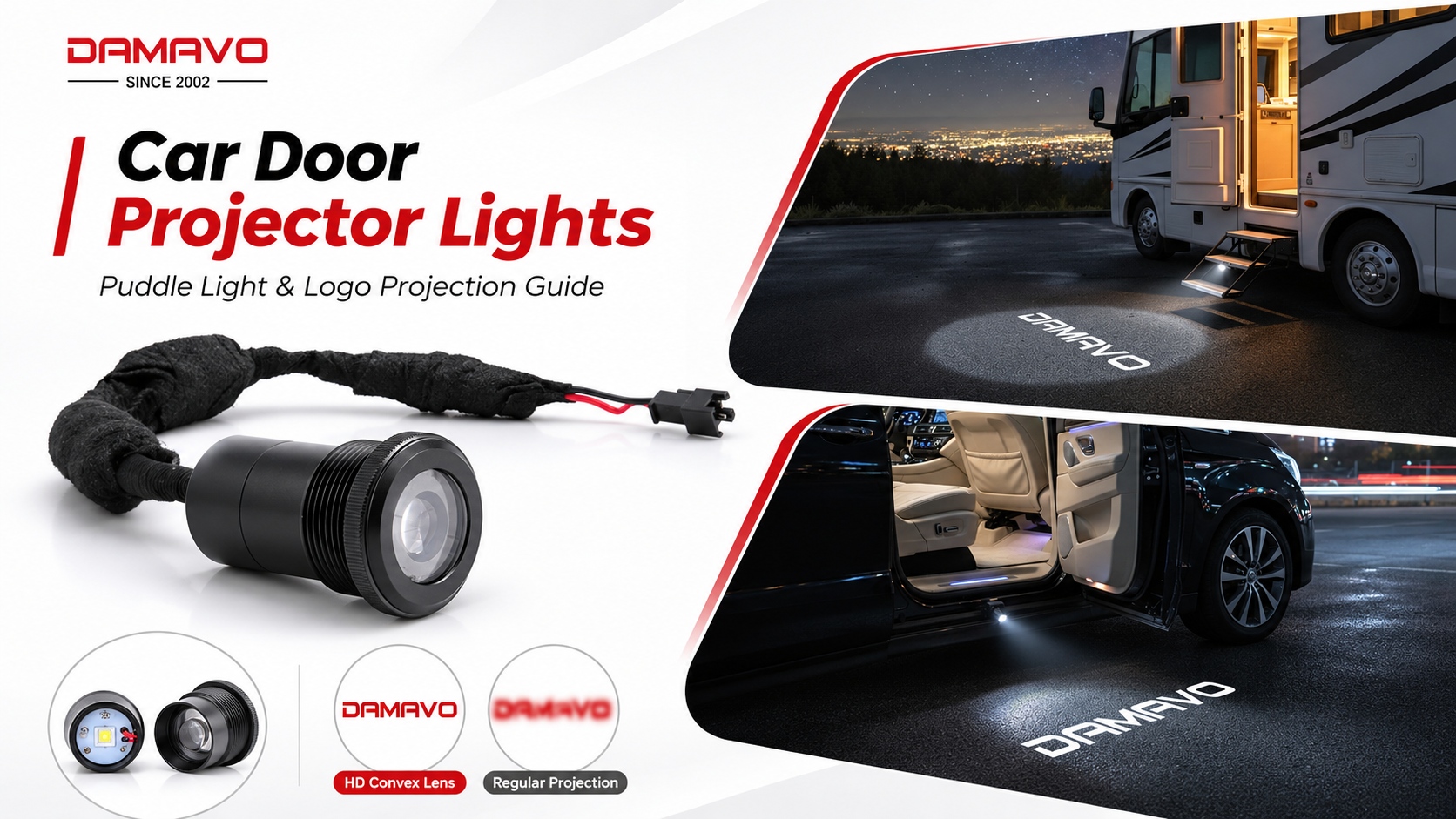
Learn how to choose car door projector lights for vehicle upgrades and OEM projects. This guide explains the differences between car puddle lights and car door logo lights, including projection quality, vehicle fitment, voltage, installation, water protection, and custom logo options.
Car Door Projector Lights Buying Guide: How to Choose the Right Puddle and Logo Lights
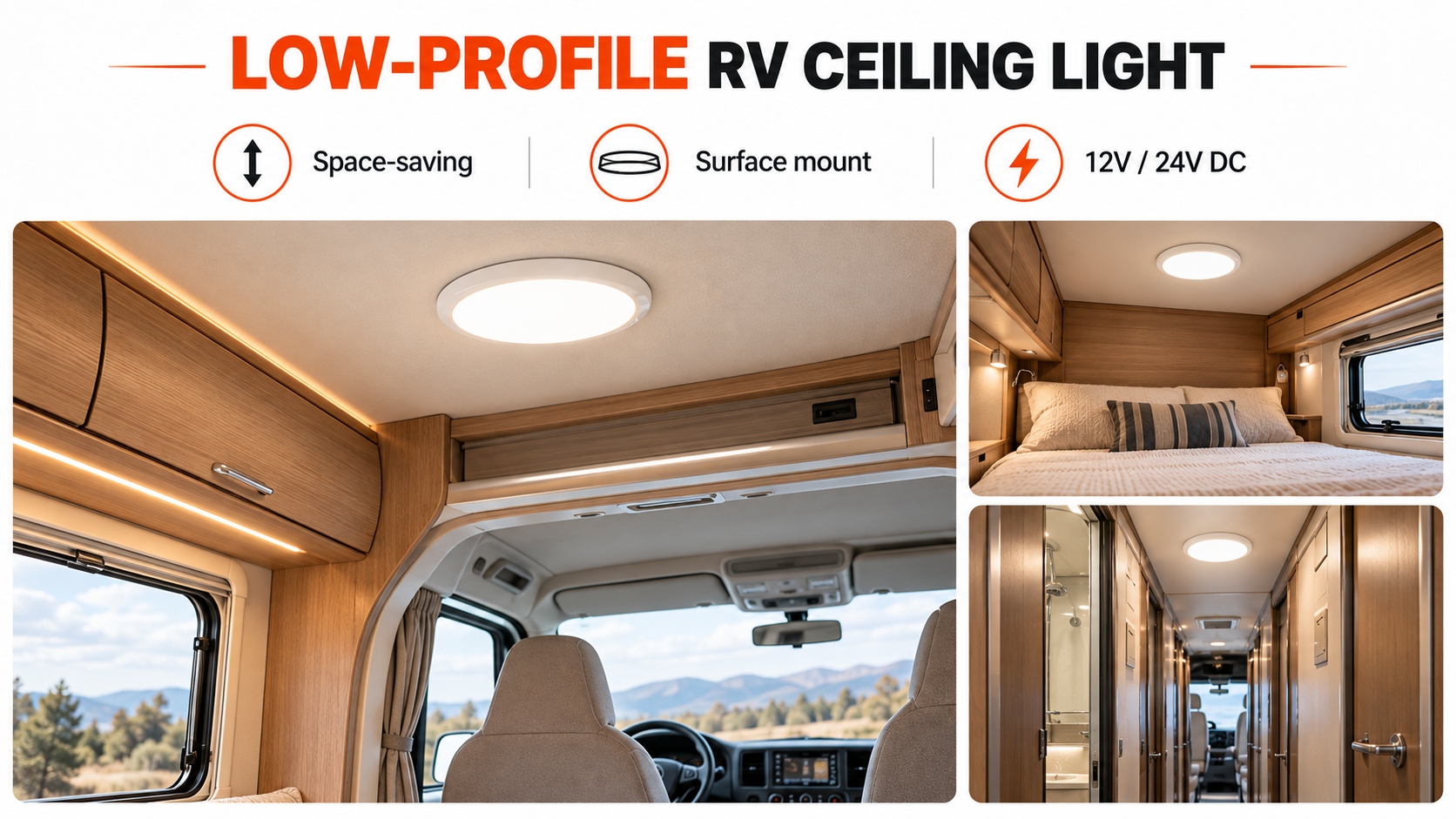
Learn how to choose low profile LED ceiling lights for RVs and motorhomes. Compare mounting styles, voltage, brightness, color temperature, and waterproof protection before buying.
Low Profile LED Ceiling Light Buying Guide: How to Choose the Right RV Lighting
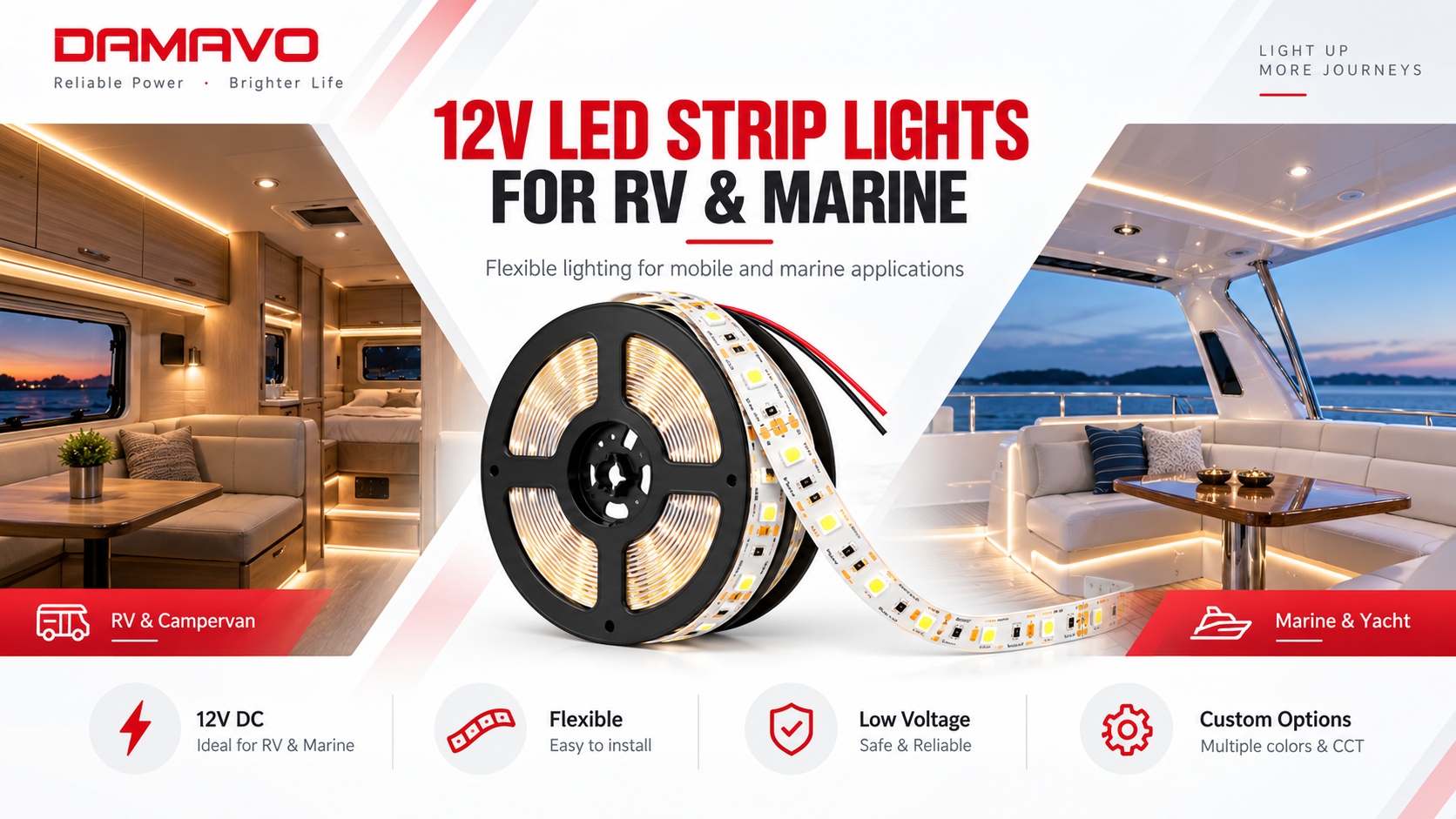
Learn how to choose the right 12V LED strip lights for RV and marine applications. This guide covers SMD vs COB, waterproof ratings, brightness, color options, installation methods, and custom LED strip lights for OEM and ODM projects.
12V LED Strip Lights Buyer’s Guide: Which 12V Lights Are Best for RV and Marine Applications
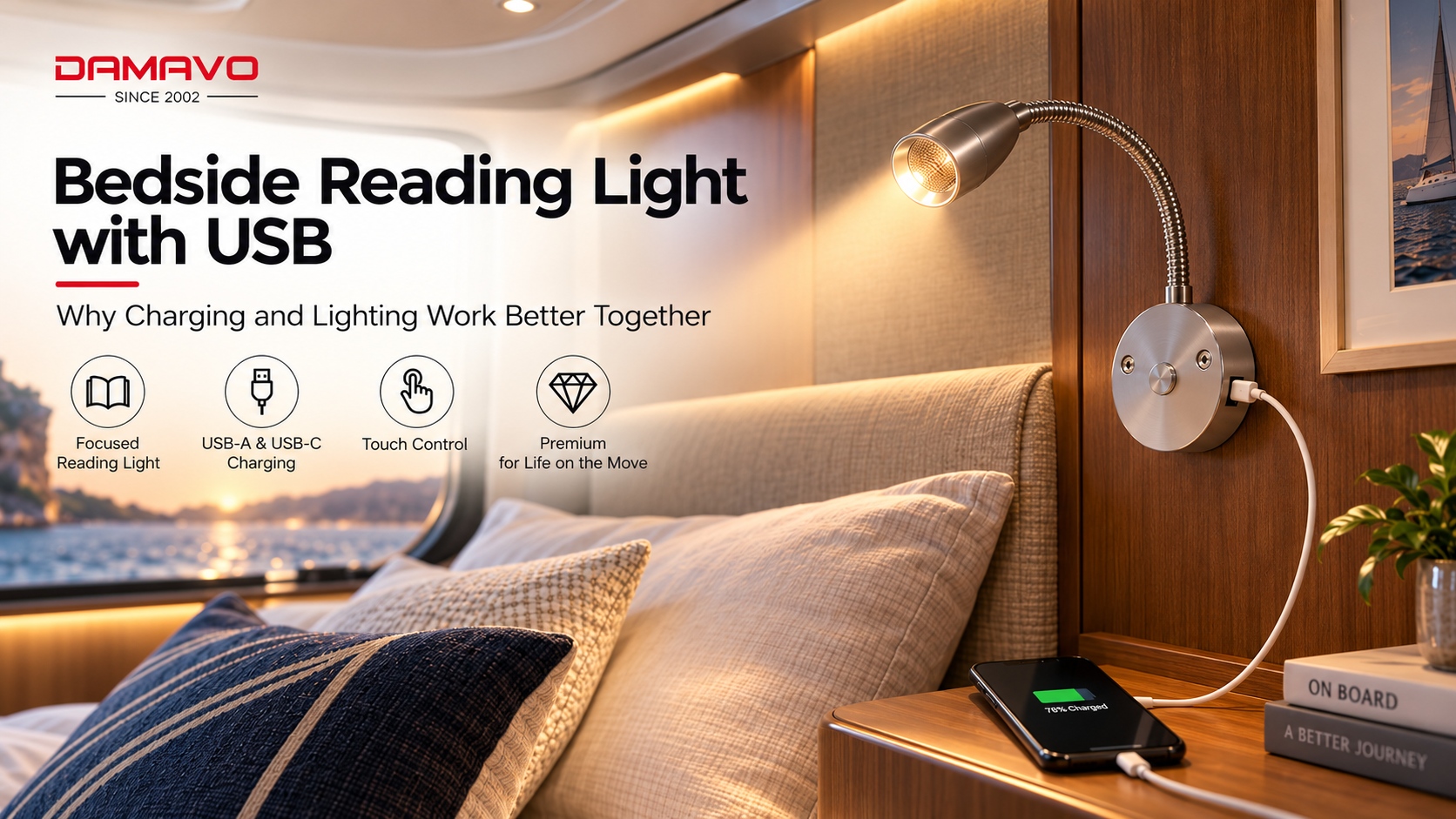
Learn why a bedside reading light with USB is a practical choice for RVs, truck sleepers, yacht cabins, and small bedrooms. This guide explains the benefits of wall mounted reading lights, USB-A and USB-C charging, flexible gooseneck design, 12V–24V compatibility, and OEM customization.
Bedside Reading Light with USB: Why Charging and Lighting Work Better Together